Door hangs crooked
Often a slack or slipped cable on one side, or a roller pulled out of the track after the door racked under load.
Serving Sebring, Florida
Off-track repair in Sebring, Florida
When a roller jumps the rail or a cable slips, the door can bind, hang crooked, or stop mid-travel. We get the track and lift cables back in sync so the door runs straight and safely again.
Uneven door warning signs
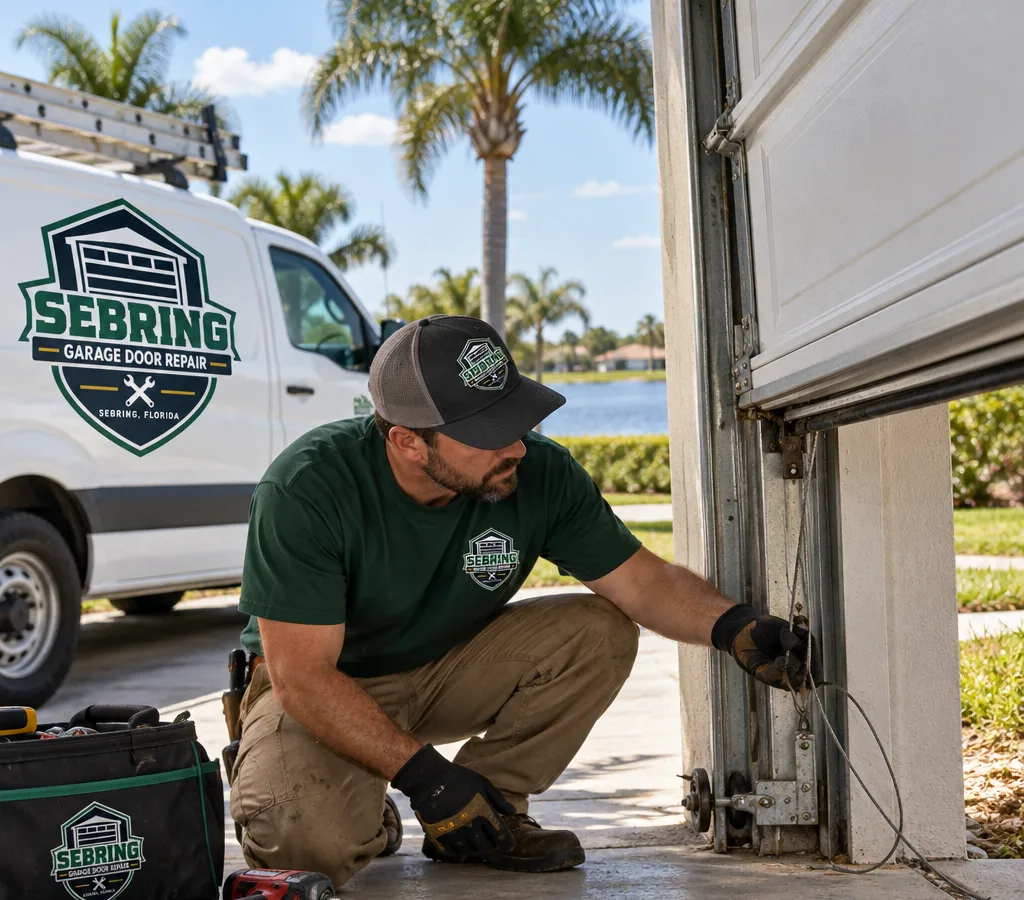
You are probably dealing with a door that looks uneven, feels heavy, or will not close cleanly. On most residential doors, two lift cables wind evenly on the drums so both sides rise and lower together. When one cable loosens, frays, or comes off the drum, the door can rack (twist), pull a roller out of the track, and jam.
Off-track issues often show up after a hard bump to the door, an obstruction under the bottom seal, worn rollers, or a track that has shifted out of plumb. The important part is that the door is under spring tension. Pulling, lifting, or forcing it can make the situation worse, damage panels, or snap a cable.
This visit focuses on getting the door seated in the tracks, getting the cables back on the drums with proper tension, and correcting the underlying cause so it does not immediately happen again. If you also need help with other garage door problems, our garage door repair page covers the broader work we handle.
Complete alignment service
A proper off-track repair is more than popping a roller back into the rail. We check the full path of travel so the door stays aligned after it is put back together.
Common checkpoints include:
Sebring homes often deal with day-to-day humidity and sudden storms. Moisture and wind-driven debris can contribute to corrosion on hardware and rough track surfaces, which increases friction and makes a marginal alignment problem show up as a derailment. The fix is typically a mix of re-alignment, hardware replacement where needed, and setting correct cable tension so the door lifts evenly.
Symptoms and likely causes
Often a slack or slipped cable on one side, or a roller pulled out of the track after the door racked under load.
Could be a cable that snapped or jumped the drum, sometimes paired with a roller wedged in the track curve.
Binding from a bent track, tight curve, or misaligned rollers can trip opener safety logic and stall travel.
Visible cable wear is a replacement signal. Fraying accelerates fast once it starts and can lead to a sudden failure.
The door may be sitting unevenly in the tracks, or the cable tension is not equal side to side.
Usually track alignment, worn rollers, or an impact that spread the track. The roller is a symptom, not the root cause.
From stabilization to testing
The repair follows the door's full lift system so the tracks, rollers, cables, and drums work together again.
We secure the door so it cannot drop or shift while tension is being corrected. If an opener is attached, we address the connection point so the operator is not fighting the door.
We check for spread, dents, loose brackets, and misalignment in the vertical and horizontal tracks. If the track is bent or twisted, it is straightened or replaced depending on damage.
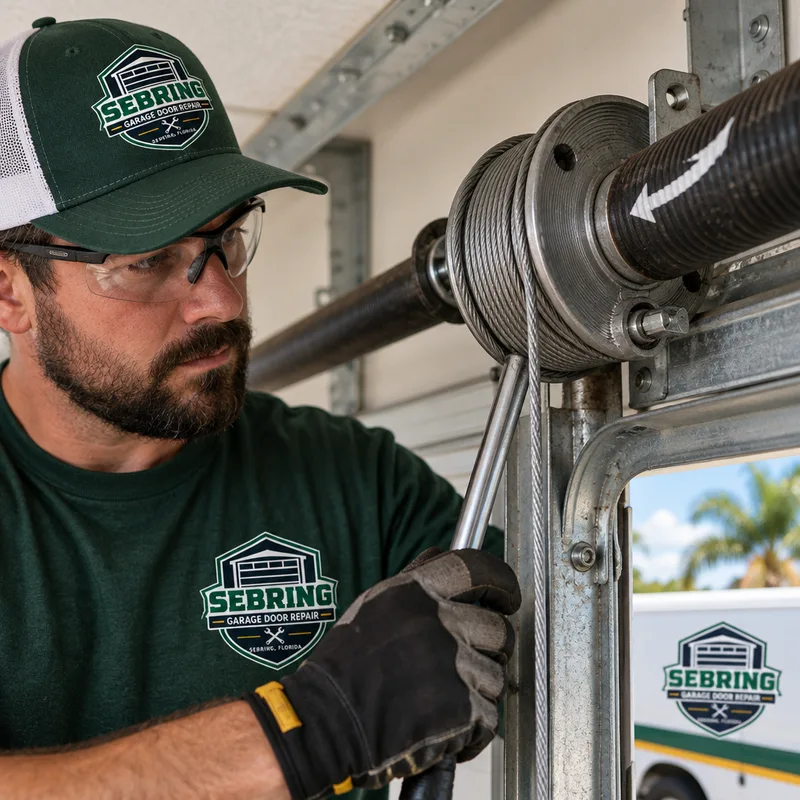
We reset the lift cables on the drums, confirm correct routing, and balance tension so both sides lift together. Frayed or kinked cables are replaced rather than reused.
Rollers are reseated, then we confirm hinges, end bearings, and bottom brackets are secure and tracking straight through the curve.
We cycle the door, listen for binding, and confirm the door runs true in the rails. If an opener is in use, we confirm smooth operation without strain or jerking.
Prevent additional damage
Homeowner guidance
No. If the door is off track, running the opener can twist the door, pull the cable farther off the drum, or bend the track. Leave the door where it is and have it inspected so the door can be stabilized and reset safely.
A cable typically comes off when tension gets uneven, often from an obstruction under the door, a door that binds in a misaligned track, worn rollers that jump in the curve, or hardware that has loosened and shifted. Once one side loses tension, the door racks and the cable can unwind or cross-wrap on the drum.
If a cable is frayed, kinked, or has broken strands, replacing both cables is usually the safer match because the remaining cable has similar age and wear. If the issue is only a slipped cable and both cables are in good condition, a reset with correct tension may be enough.
A bent track often shows a visible crease, flat spot, or pinch point where rollers hesitate or pop, while misalignment usually shows as widening or narrowing gaps and loose brackets that let the track shift. During service, we check plumb, spacing, and the curve transition to decide whether straightening is reliable or replacement is the better fix.
It is risky. With a loose or off-drum cable, the door can lift unevenly and bind, and it can drop suddenly if the remaining side loses grip. If you must get a vehicle out, it is safer to have the door stabilized and lifted with controlled support rather than forcing it.
Timing depends on what we find. If the track is badly bent, multiple rollers are damaged, or hardware needs replacement, it can take longer because alignment and testing are what keep the problem from returning.
Yes, it can. A crooked door can crease sections, tear weather seal, and put side-load on hinges and rollers. If the opener keeps trying to move a binding door, it can strain the operator rail, trolley, or attachment point. Addressing cable tension and track alignment early usually limits additional damage.
Restore smooth travel
Tell us what the door is doing (crooked, stuck, cable loose, rollers out of the rail) and when it started. We'll inspect the track and cable system, explain what failed, and get the door running smoothly again.