Door stuck open
We secure the opening first, then diagnose the lift system, including springs, cables, drums, rollers, and track alignment, so the door can close safely and stay closed.
Serving Sebring, Florida
Emergency garage door service in Sebring, Florida
When your door is stuck open, hanging crooked, or trapped shut, you need a safe plan fast. We troubleshoot the failure, secure the door, and repair it with clear options before any work begins.
Immediate safety matters
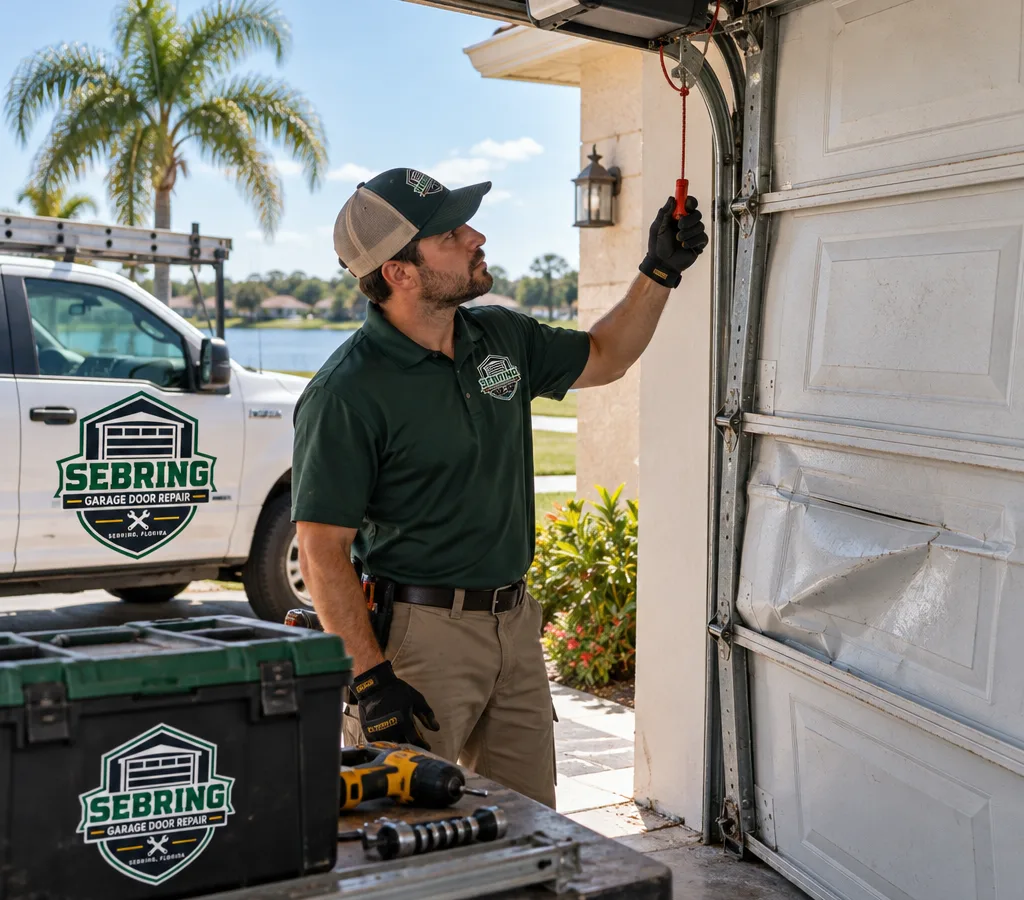
A garage door that will not move is more than an inconvenience. If it is stuck open, it can expose tools, vehicles, and the inside of the home. If it is jammed shut, it can trap a car when you need to get to work, school, or an appointment. And if it is hanging at an angle after a cable slips, it can fall or bind hard enough to damage panels and tracks.
This service is for broken garage door repair Sebring homeowners and property managers need right now: careful triage, safe handling of high-tension parts, and a repair that fixes the actual cause, not just the symptom. Common failures include snapped cables, broken torsion or extension springs, seized rollers, bent tracks, off-track doors, damaged hinges, and opener-related issues.
Start with safety: do not pull an emergency release on a door that is crooked or heavy, do not loosen set screws on a spring or drum, and do not stand under a door that is drifting downward. An on-site inspection is the safest way to confirm what failed and what it will take to secure the door.
Problems that need careful handling
We secure the opening first, then diagnose the lift system, including springs, cables, drums, rollers, and track alignment, so the door can close safely and stay closed.
A tilted door often means a cable issue, a roller out of the track, or track damage. We re-seat the door, correct alignment, and replace damaged parts as needed.
A humming opener can point to a stuck door, stripped gear, failed capacitor, or travel and force problems. We separate door balance issues from opener faults before recommending parts.
A door that suddenly feels extremely heavy, drops fast, or will not lift is often a spring failure. We verify spring type and sizing before replacement so the door balances correctly.
Cables fail under load and can whip or unwind. We reset drums, replace frayed cables, and inspect bearing plates and bottom brackets for related damage.
Reversals can come from photo-eye issues, track obstruction, roller bind, or an unbalanced door. We test safety sensors and then check mechanical resistance.
High-tension systems need controlled repair
Most emergency calls come down to a few mechanical truths: a garage door is a heavy moving wall, and the spring system stores enough torque to lift it. When something fails, the door does not just stop politely. It twists, binds, and loads parts unevenly.
We start by making the situation safe. That can mean clamping the track to stop drift, disconnecting an opener that is fighting a jam, and checking for a door that is no longer supported evenly by both sides. From there, we identify the failure chain. A door that is off-track often has a reason: a worn roller, a bent vertical track, a loose hinge, or a cable that lost tension after a spring break.
Then we verify door balance. Many opener problems are really door problems. If a spring is broken or undersized, the opener can burn out or strip gears. If the track is pinched, the opener can reverse repeatedly. Getting the door balanced and running smoothly is what makes the repair last.
In Sebring, garages that sit idle in the heat and humidity can develop dry rollers, corroded hardware, and stiff bearings. Those conditions can turn a minor issue into a door that will not move during the moment you need it to.
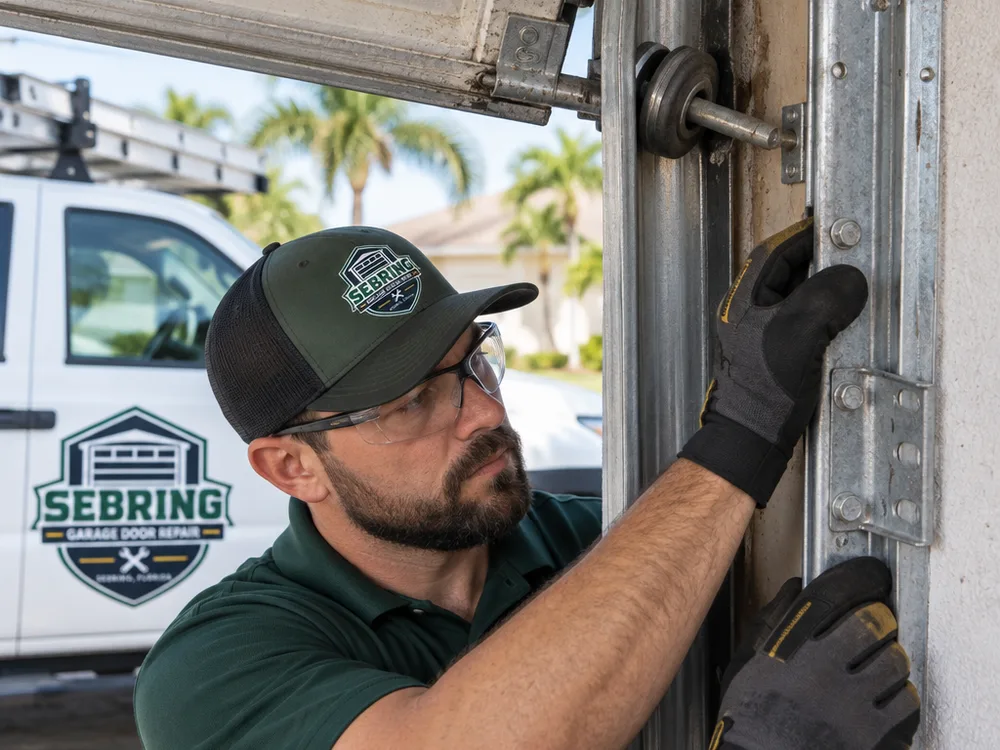
Springs, cables, drums, rollers, and tracks are checked together because one failure can load the rest of the system unevenly.
From stabilization to verification
The process begins by controlling the immediate risk, then follows the failure back to its source before the door is tested under normal operation.
We confirm whether the door is stable, whether any parts are under abnormal tension, and whether the opener should be disconnected to prevent additional damage.
We inspect springs, lift cables, drums, rollers, hinges, track alignment, and the opener interface so the repair targets the real failure point.
You get a straightforward explanation of what failed, what must be replaced now to restore safe operation, and what can be addressed later if it is not urgent.
We replace damaged components, realign track as needed, set proper cable tension, and tighten hardware so the door moves smoothly without binding.
We test manual operation, confirm balance and travel, and verify that the door closes and opens reliably without slamming, drifting, or reversing unexpectedly.
Know the symptom
A garage door can fail in a lot of ways, but emergency breakdowns in the Sebring area tend to cluster around a few parts. Knowing the symptom helps you stay safe until the door is fixed..
If you heard a loud bang and the door now feels impossibly heavy, a spring likely broke. Do not try to help the opener lift it; that can damage the opener.
A cable can fray, snap, or jump off the drum. The door often lifts on one side only and jams. Stop using the opener immediately to avoid twisting the door or bending track.
A roller can pop out or a track can get knocked out of alignment. If the door is partway up and skewed, keep clear of the opening until it is stabilized.
Bent vertical track, loose brackets, or seized rollers can cause the door to stick and the opener to reverse. The fix is mechanical adjustment and part replacement, not more opener force.
Sometimes the door is fine but the opener is not. We check power, wall control, and photo eyes first, then determine whether the problem is in the opener drive system or the door load.
Emergency repair is about getting you safe and operational first; long-term reliability comes from correct balance, alignment, and hardware condition.
CALL NOW: (863) 451-8574Emergency homeowner guidance
Keep people and pets away from the door, stop using the opener, and avoid pulling the manual release if the door is crooked or drifting. If the door is stable and you can safely secure valuables, do so, then schedule emergency service so the door can be stabilized, inspected, and closed without risking a fall or further damage.
You can sometimes lift it with multiple adults, but it is risky because the door may be far heavier than expected and can slam down. In Sebring garages where hardware is worn or corroded, a heavy door can also bind and twist. The safer choice is to have the spring system repaired and the door balanced before regular use.
A door that is crooked, lifts unevenly, or has a dangling cable points strongly to a cable issue, while a door that is evenly heavy and will not lift often indicates a broken spring. Many emergencies involve both, because a spring failure can let a cable unwind. An on-site inspection confirms the cause without guessing.
Only if the door is fully closed and not under unusual load. If the door is stuck halfway or hanging at an angle, releasing it can let the door drop quickly. When you call, mention whether the door is open, closed, or crooked so the right safety steps come first.
Yes. Off-track repair usually involves re-seating rollers, correcting track alignment, and replacing any bent track sections or damaged rollers and hinges. The key is restoring smooth travel and confirming the lift cables are properly seated on the drums before the door is operated again.
If the door is reversing or refusing to close and the sensors are part of the issue, we address it during the same visit. We also check for mechanical resistance, because sensors can look like the problem when the real cause is binding track or an unbalanced door.
Reversing can happen when the opener senses resistance. That resistance may come from track misalignment, worn rollers, a door that is out of balance, or an opener force setting that is no longer appropriate. In humid Florida conditions, stiff rollers and rusty hinges can add enough drag to trigger reversals.
Usually, yes, but the safest method depends on what failed. If a spring or cable issue is holding the door down unevenly, forcing it can cause a sudden release. Emergency repair focuses on restoring controlled lifting so the door opens without twisting or dropping.
Secure the opening
If your door is stuck open, jammed shut, or hanging crooked, call for emergency troubleshooting and a repair plan based on what actually failed.